The cost of an electric bike is not limited to the purchase price: there are recurring expenses that many people don't calculate before deciding, and also real savings that are rarely quantified correctly. If you're about to take the plunge but need the numbers on the table before convincing yourself — or your partner — this article is written exactly for you. We're going to break down every euro you'll spend and every euro you'll save, with real data from the Spanish market in 2026, so you leave here with your own calculation you can use to make your decision.
What expenses make up the annual cost
When we talk about the cost of an electric bike, most people only look at the sticker price. But the total cost of ownership — what economists call TCO (Total Cost of Ownership) — includes quite a bit more: the depreciation of the initial purchase, the electricity cost for charging the battery, annual maintenance (brake pads, tyres, lubrication), the possible battery replacement in the long term, and in some cases theft insurance. Only by adding all these items together do you get an honest picture of what your ebike will cost you each year. And the good news is that, when properly calculated, that number is usually much lower than people expect.
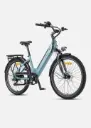
To make this calculation concrete, we'll use the ENGWE L20 3.0 Boost as an example — an urban electric bike that represents the entry-to-mid-range segment where most buyers in Spain operate. With a reasonable useful life of several years (conservative for a well-maintained ebike), the annual depreciation of the initial purchase is spread across those years. For the current price and a full breakdown of what it includes, see our article on how much an ENGWE costs to buy. On top of that come the operating costs we'll break down in detail below. The goal is not to scare you with numbers, but to help you understand exactly what every euro you invest is made up of.

Annual ebike expenses in Spain: breaking down the real numbers
The annual cost of an ebike in Spain can be divided into four main blocks: electricity, preventive maintenance, corrective maintenance, and optional extras. Electricity is the most surprising cost — because it's so cheap. A typical 520 Wh battery (like the one in the L20 3.0 Boost) consumes approximately 0.52 kWh per full charge. With the average electricity price in Spain in 2026 hovering around 0.18–0.22 €/kWh, each full charge costs between 9 and 11 euro cents. If you use the ebike 5 days a week and charge every 2–3 days, we're talking about an annual electricity cost of between 10 and 25 euros. Yes, you read that right: less than 25€ per year in fuel.
Preventive maintenance is the second block, and here you do need to budget a bit more. A basic annual service at a bike shop in Spain costs between 40 and 80€ and includes brake adjustment, spoke tensioning, chain lubrication, and a general check. The most common consumables are hydraulic brake pads (15–30€ per set), the chain (10–20€ per year if you ride a lot), and tyres (25–50€ per tyre with a useful life of 3,000–5,000 km). Adding everything up realistically for daily use of 20–30 km, total annual maintenance falls between 100 and 200€ for most owners. If you're careful and do basic maintenance yourself, you can bring it down to 60–80€.
Electric bike savings vs car: a real comparison in Spain 2026
Here's the number that truly changes the perspective: the savings of an electric bike compared to a car in the Spanish context of 2026. A worker who uses a car to commute to work in an average Spanish city covers between 10 and 25 km daily (round trip). With an average consumption of 7 litres per 100 km and petrol prices around 1.65–1.80 €/litre in 2026, that daily commute costs between 1.15 and 3.15€ in fuel alone. Per year, that's between 250 and 700€ purely in petrol for the commute. And that's without counting parking, which in the centre of Valencia, Madrid, or Barcelona can easily cost between 60 and 150€ per month in regulated zones or car parks.
If you add petrol + parking for a worker in an average Spanish city, the potential savings from replacing that commute with an ebike sit between 600 and 1,200€ per year. Even in the most conservative scenario — short distance, free parking — the minimum savings come to around 300–400€ per year. Compared to an annual ebike cost of 150–200€ (electricity + maintenance), the net difference is clearly positive from the very first full year of use. And if we compare with public transport — a monthly pass in Valencia or Madrid exceeds 50–60€/month in 2026 — the annual savings versus the metro or bus surpass 400–500€ once the purchase is paid off.

| Item | Car (urban use) | Public transport | Ebike (annual estimate) |
|---|---|---|---|
| Fuel / Electricity | 400–700 €/year | — | 10–25 €/year |
| Parking | 300–1,200 €/year | — | 0 € (bike lane / pavement) |
| Pass / Mandatory insurance | 400–700 €/year (insurance) | 600–720 €/year (pass) | 0–60 €/year (voluntary insurance) |
| Annual maintenance | 300–600 €/year | — | 100–200 €/year |
| Purchase depreciation | 1,500–3,000 €/year | — | 200–280 €/year |
| Estimated annual total | 2,900–6,200 € | 600–720 € | 310–565 € |
Electric bike maintenance: what to expect each year and how much it costs
The real price of electric bike maintenance is one of the aspects most underestimated by people before buying — but not because it's expensive, rather because it's surprisingly cheap compared to any motor vehicle. The electronic component (motor and controller) requires virtually no maintenance under normal conditions of use. Hydraulic brakes, the most common type on mid-to-high-range ebikes, need bleeding every 2–3 years (30–50€ at a shop) and new pads every 1,500–2,500 km depending on use. If you use your ebike mainly in the city, with gentle braking and no mountain descents, the pads can easily last 2 years.
The chain is the consumable that requires the most day-to-day attention: monthly lubrication with a specific oil (4–6€ per bottle lasting 6 months) and an annual or biannual replacement (10–20€) is all you need. Tyres are another recurring cost but also not excessive: a quality tyre for an urban ebike costs between 25 and 45€ and lasts between 3,000 and 6,000 km. For someone averaging 15 km daily, that means changing tyres every 1–2 years. Following this basic maintenance schedule, the total annual cost stays comfortably between 100 and 200€ for the vast majority of owners in Spain, even with an annual workshop visit.
-
Annual service at a workshop (recommended)
40–80€. Includes brake adjustment, spoke tensioning, electrical system check, and general lubrication. Can be done at any specialist bike shop. -
Brake pads
15–30€ per set. Replace every 1,500–2,500 km depending on use. With gentle city braking, they can last 2 years without issue. -
Chain and lubrication
10–20€/year. Lubricate monthly with specific chain oil (4–6€/bottle) and replace the chain when the wear indicator says so. -
Tyres
25–45€ per tyre. Useful life of 3,000–6,000 km. Check the pressure every 2 weeks to maximise their lifespan. -
Battery (long term)
250–450€ for eventual replacement, every 4–6 years with correct use. Not an annual expense, but worth bearing in mind when calculating the 5-year total TCO.
How much does it cost to maintain an electric bike per year: the real calculation nobody gives you
To answer definitively the question of how much it costs to maintain an electric bike per year, let's run the complete calculation with real numbers for a typical owner in Spain. Profile: a worker who uses the ebike to commute 5 days a week, covering around 15 km daily (7.5 km each way), with additional use at weekends for errands. Approximate annual distance: 4,000–5,000 km. This profile is representative of the majority of urban buyers in medium and large Spanish cities.
With that level of use, the real annual breakdown would be: electricity 15–20€, preventive maintenance (workshop + consumables) 120–170€, voluntary theft insurance 40–60€ (optional but highly recommended in cities), and purchase depreciation 200–280€ (over a useful life of 5–6 years). Full annual total, including depreciation: between 375 and 530€. Excluding depreciation (if you already treat it as a one-off expense already made): between 175 and 250€ per year. If you then subtract the transport savings — even comparing only with public transport at 55€/month (660€/year) — the ebike starts to "pay back its depreciation" within 2–3 years of regular use. Compared with car savings, that period drops to 1–2 years in many cases.
💰 Versus the car
Potential savings of 600 to 1,200€ per year by adding up petrol, parking, and part of the car maintenance you stop needing as you reduce its use. The ebike pays for itself in 1–2 years.
🚇 Versus public transport
A public transport pass in Spanish cities exceeds 600€ per year. The ebike, once paid off, costs less than 200€/year to operate. The net saving exceeds 400€ from the third year onwards.
⏱️ Time and quality of life
In cities with heavy traffic, the ebike is often as fast as or faster than a car for journeys under 10 km. Plus, you arrive without hunting for parking and with some physical activity built into your daily routine.

As we explain in our Valencia routes guide, the city's cycling infrastructure has improved notably in recent years, making daily ebike use increasingly comfortable and safe. This is relevant to the cost calculation because a city with a good cycle lane network reduces bike wear (fewer sudden braking events, fewer potholes) and extends the useful life of consumables. In short, the better the infrastructure in your city, the lower your annual maintenance cost will be.
Recommended ENGWE models for urban use: optimised cost of ownership
If you want to maximise the ratio between cost of ownership and performance for urban use in Spain, two models stand out clearly in the current catalogue. The ENGWE L20 3.0 Boost (1,399€) is the most balanced option for daily commuting: its step-through design makes it easy to mount in work clothes, and its EN 15194 certification guarantees it meets all legal requirements to ride in Spain without needing registration plates or mandatory insurance. Its 250W motor and 520 Wh battery offer more than enough range for most daily urban journeys, and the 3-year warranty covers the critical initial period for potential issues.
For those looking for greater versatility — for example, combining the daily commute with more demanding weekend rides — the ENGWE N1 AIR (1,449€) offers optimised weight and a sportier geometry without sacrificing EN 15194 approval. Both models include an official 3-year warranty at our service centres in Spain, which significantly reduces the risk of unexpected expenses during the first years — a factor worth including in the TCO calculation, because the warranty is equivalent to free repair insurance during that period. In practical terms, during the first 3 years your actual corrective maintenance cost should be virtually zero if a component fault occurs.


Conclusion: justify your investment with real data
The analysis of the real cost of an electric bike in Spain in 2026 is clear: the total annual cost (including purchase depreciation) sits between 375 and 530€, while the savings versus a car or public transport exceed 400–800€ per year in most cases. That means that within 2 to 3 years, the ebike has paid for itself — and from that point on, every year you use it is net savings. If you have questions about which model best suits your situation, at ENGWE Spain we're available to help you choose the most suitable option for your specific case: distance to work, terrain type, storage needs, and budget. Explore the full catalogue at engwespain.es and make your decision with all the data on the table.