Short answer: a pedal-assist bicycle with a maximum continuous rated motor power of 250W, assistance only while pedalling and progressive cut-off before 25 km/h is treated as a bicycle. It does not need a licence, registration plate, ITV test or compulsory insurance. If it fails any of the three criteria, its classification and requirements may change.
- Maximum continuous rated power: 250W.
- The motor assists only while you pedal.
- Assistance is progressively reduced and cuts off before 25 km/h.
- Check the EU declaration of conformity, CE marking and documentation for the version sold in Spain.
Electric Bike Regulations in Spain: The Essential Facts You Need to Know
The key legal definition comes from Article 2(2)(h) of Regulation (EU) 168/2013, not from a marketing power figure. Pedal cycles are excluded from L-category vehicle type approval when they have an auxiliary electric motor with a maximum continuous rated power of 250W or less, the motor stops helping when the rider stops pedalling, and assistance is progressively reduced and cut off before 25 km/h.
Spain added the same definition of a “pedal cycle with pedal assistance” to Annex II of its General Vehicle Regulations through Order PJC/780/2025. EN 15194 helps demonstrate the safety and conformity of an EPAC, but a marketing reference to “EN 15194” should not be confused with complete legal documentation: before buying, also check the CE marking, EU declaration of conformity and the configuration sold in Spain.
E-Bike Regulation 2026: Key Changes and Their Impact on Buyers
Two national updates belong in a current guide. First, Law 5/2025 changed compulsory motor insurance and introduced rules for personal light vehicles, but expressly excluded pedal-assist bicycles that meet the 250W, pedalling and cut-off-before-25 km/h criteria. They should not be confused with personal mobility vehicles or electric scooters, which are subject to registration and insurance.
Second, Royal Decree 518/2026, published on 26 June, takes effect on 1 October 2026. For bicycles, it clarifies urban riding: use the carriageway when there is no cycle facility, prefer a cycle lane unless a sign makes it compulsory, do not ride on pavements, and ride preferably in the centre of the traffic lane when safe. It also requires a motor vehicle following a bicycle in the same lane to leave at least five metres.
For helmets, the rule through 30 September already requires one for every rider on non-urban roads, subject to the exceptions in the current wording, and for riders under 16 on every type of road. From 1 October, the non-urban exceptions are removed and professional riders must also wear a helmet on urban roads and through-roads.
The date matters: the previous wording of the General Traffic Regulations applies through 30 September; the new national rules apply from 1 October alongside each municipality’s bylaw.
Electric Bike Licence: Do I Need One to Ride?
You do not need a licence, registration plate or ITV test for a pedal-assist bicycle that meets all three legal criteria: no more than 250W continuous rated power, assistance only while pedalling and progressive cut-off before 25 km/h.
Exceeding one limit does not automatically turn every vehicle into the same kind of moped. It means the vehicle leaves the exempt EPAC bicycle definition and may fall into an L category — such as L1e-A or L1e-B — whose type approval, licence, registration, insurance and equipment depend on its design and documentation. Law 5/2025 requires insurance, among other cases, for powered cycles designed to be pedalled whose auxiliary propulsion has a maximum speed above 25 km/h. If the specification is unclear, do not use the vehicle on public roads until its category is confirmed.
National rules do not set a specific minimum age for an EPAC as a bicycle, but local bylaws may add conditions. The relevant age and licence rules apply to L-category vehicles.
Riding E-Bikes in the City: Where You Can and Cannot Go
A compliant EPAC follows bicycle rules. From 1 October 2026, it must use the carriageway when no cycle lane or specific cycle facility exists. A cycle lane is preferred when available and becomes compulsory only when the authority uses sign R-407a. On the carriageway, the new Article 153 says cyclists should preferably ride in the centre of the lane when their safety and that of other road users allow it.
Riding on the pavement is prohibited. The new rules allow a municipal bylaw to create an exception for children up to 12 accompanied by an adult on foot. In other pedestrian areas, the municipality may permit coexistence, always with pedestrian priority. Check the local bylaw: it may regulate pavement-level cycle tracks, pedestrian areas, contraflow cycling and specific speed limits.
On non-urban roads, the general bicycle rules apply, including use of the right-hand hard shoulder when it is passable and wide enough. Bicycles may not use motorways; riders over 14 may use a dual carriageway hard shoulder only where this is not expressly prohibited, subject to the rules and signs for that road.
Speed Limit for Electric Bikes: What the Law Says
The 25 km/h figure is the electric-assistance cut-off, not permission to ride at that speed everywhere and not the general limit for every road. Assistance must progressively reduce before the threshold and the motor stops propelling at it. You may go faster through your own pedalling only where the road limit and safety conditions allow it.
On carriageways, cycle lanes and shared areas, obey signs, the municipal bylaw and a speed appropriate to the surroundings. Spain does not have one universal 30 km/h limit for every cycle lane. Tampering with firmware, sensors or limiters may take the vehicle outside its approved configuration, change its legal category and affect liability or insurance cover after a collision.
Do I Need Insurance for My Electric Bike in Spain?
Compulsory motor insurance is not required for an EPAC that meets the 250W, pedalling and cut-off-before-25 km/h criteria. Additional Provision One, section 3(c), of Law 5/2025 expressly excludes it from the definition of a personal light vehicle. It also needs no registration plate or ITV test.
Voluntary third-party liability, theft or damage cover may still be useful, especially for daily use. First check whether your home insurance already covers electric bicycles and review its limits, exclusions and insured value. If the vehicle falls outside the EPAC definition, do not assume it is exempt: its specific category may require insurance and other authorisations.
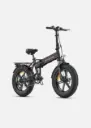
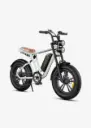
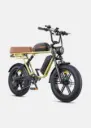
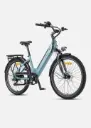
Which ENGWE E-Bikes Comply with Spanish Regulations in 2026
Conformity must be checked for the exact version sold in Spain, because the same product name may have different configurations in other markets. In the specification and documents, look for 250W maximum continuous rated power, assistance only while pedalling, progressive cut-off before 25 km/h, CE marking and an EU declaration of conformity; a reference to EN 15194 provides additional information about the EPAC’s technical requirements.
Engwe Spain sells configurations intended for the Spanish market and provides local documentation and support. If you are unsure about a particular model, request its declaration of conformity before buying and do not rely on videos or specifications for US or other non-EU versions.


Conclusion: Buy with Legal Certainty in 2026
For a legal EPAC bicycle, confirm all three criteria —250W continuous rated power, assistance only while pedalling and cut-off before 25 km/h— and keep the invoice and EU declaration of conformity. It needs no licence, registration plate, ITV test or compulsory insurance, but it must still comply with road rules and the local bylaw.