Why Buy an Electric Bike in 2026?
The electric bike market in Spain has experienced unprecedented growth. E-bike sales have increased by 35% over the last two years, establishing the electric bicycle as the most in-demand urban transport of the moment. In cities like Valencia, Madrid and Barcelona, thousands of citizens have already discovered the advantages of pedalling with electric assistance: less sweat, more kilometres, and minimal operating costs compared to a car or motorbike.
The electric bike price has dropped considerably thanks to mass production and technological improvement. Today you can find quality models from €800 to premium models above €3,000. But how do you choose the best e-bike 2026 for you? This complete guide will help you make the right decision.
💰 Economic Savings
Save up to 90% on transport compared to a car. The cost per kilometre of an e-bike is €0.01 versus €0.15 for a private vehicle.
🌱 Sustainability
Zero emissions while travelling. Reduce your carbon footprint and contribute to cleaner, more liveable cities for everyone.
⚡ Comfort
Arrive at your destination without sweating, avoid traffic jams, park easily. The urban e-bike adapts to any lifestyle.
Types of Electric Bikes: Which One Is Right for You?
Before talking about electric bike prices and technical specifications, it is essential to understand what type of use you will give your future e-bike. Needing a bike for your daily commute to work is not the same as needing one to explore mountain trails on weekends.
1. Urban E-Bikes (Commuter E-Bikes)
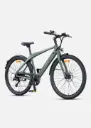
Urban electric bikes are designed for daily city use. They are characterised by their upright posture, which provides a wide view of traffic, integrated mudguards to protect you from splashes, a rear rack to carry your things, and a comfortable geometry for short and medium journeys. They are the perfect option for urban e-biking in Spain, especially in cities like Valencia with its cycle lane network.
The rear hub motor is the most common in this type of bike, offering smooth and silent assistance. The battery is usually integrated into the frame for a cleaner design and to protect it from theft.
2. Mountain E-Bikes (E-MTB)
E-MTBs are designed for demanding terrain: dirt tracks, mountain trails, gravel routes. They are characterised by their front suspension (hardtail) or full suspension, wide tyres with tread for greater grip, and typically a mid-drive motor that offers better weight distribution and greater torque for steep climbs.
The mid-drive motor, situated at the bottom bracket, uses the bike's transmission chain, allowing it to use gear changes to optimise power according to the terrain. This results in a much more natural and efficient pedalling experience. Brands like Bosch, Shimano Steps or Bafang offer high-quality mid-drive motors that have become the industry standard.
3. Trekking and Gravel E-Bikes
Trekking and gravel electric bikes are the most versatile: they work well both in the city and on unpaved paths. They are the ideal option if you are looking for an electric bike that serves multiple purposes: commuting to work during the week and exploring routes at weekends.
4. Folding E-Bikes
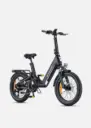
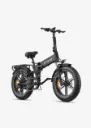
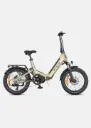
Folding electric bikes are perfect for those who combine cycling with public transport or need to store them in small spaces. Although smaller, many folding models offer surprising performance, with high-capacity batteries and powerful motors.
Motor: The Heart of Your Electric Bike
The motor is the most important component of any e-bike. It determines the power, efficiency and feel of pedalling. There are two main types of motors on the electric bike market:
Hub Motor
Hub motors are integrated into the hub of the front or rear wheel. They are the most common in mid-to-low range e-bikes due to their lower manufacturing and maintenance costs. The rear hub motor is the most common, as it provides more natural traction.
- Advantages: Less maintenance, quieter, lower cost
- Disadvantages: Less natural pedalling feel, worse on long climbs, more weight on the wheel
Mid-Drive Motor
The mid-drive motor is located at the bottom bracket, in the centre of the frame. It uses the bicycle's transmission chain, allowing it to use gear changes to optimise power according to terrain. This results in a much more natural and efficient pedalling experience.
- Advantages: Optimal weight distribution, better performance on climbs, more natural pedalling, greater battery efficiency
- Disadvantages: Higher cost, more maintenance (greater chain wear), more complex repair
What Battery You Need for Your Commute
The e-bike battery capacity is one of the most important factors to consider when buying an electric bike. It is measured in watt-hours (Wh) and directly determines the vehicle's range.
The real range depends on many factors: the assistance level used, the rider's weight, terrain, speed, temperature and battery condition. Manufacturers usually indicate the range under optimal conditions (low assistance level, light rider, flat terrain), so in real conditions expect to get between 60% and 80% of the maximum stated range.
Types of Battery Cells
E-bike batteries use lithium-ion cells, mainly of two types:
- NMC (Nickel-Manganese-Cobalt): High energy density, lighter, higher cost. Used by premium brands like Bosch, Shimano.
- LFP (Lithium Iron Phosphate): Longer lifespan, safer, but heavier and slightly less efficient. Increasingly used in mid-range e-bikes.
Compare ENGWE Models
Instead of a fixed table that goes out of date with every price or stock change, check our up-to-date comparison of ENGWE models, with motor, range, folding and recommended use for each model.
What Level of Assistance Do You Need?
Electric bikes in Europe are classified according to their level of assistance and maximum speed. The legal criterion is a maximum continuous rated power of less than or equal to 250W, with the motor assisting only while you pedal and assistance progressively reduced and cut off before 25 km/h (Art. 2(2)(h) of Regulation (EU) 168/2013 and Annex II of Spain's General Vehicle Regulations; the harmonised EN 15194 standard governs the technical construction requirements for these bicycles, not their legal status). This type of bicycle is called a pedelec or EPAC (Electrically Power Assisted Cycle) and does not require a licence plate or compulsory insurance (regulations in force checked on 29.08.2026).
- Max 250W nominal motor power
- Assistance cuts off at 25 km/h
- No licence plate required
- No compulsory insurance required
- Can use cycle lanes
- No minimum age to ride
- Motor up to 4kW maximum power
- Assistance cuts off at 45 km/h
- Requires moped licence plate
- Compulsory insurance required
- CANNOT use cycle lanes
- Helmet compulsory
Key Factors for Choosing Your Electric Bike: Complete Checklist
1. Define Your Main Use
Before any other consideration, determine what you will mainly use your e-bike for:
- Daily commute to work (commuting)?
- Weekend excursions on nature trails?
- Carrying shopping or loads?
- Family use with children?
- Long-distance cycle touring?
The answer to these questions will determine the most suitable type of e-bike, the necessary battery capacity and the most convenient type of motor.
2. Analyse the Terrain
The terrain you will ride on is fundamental to choosing the right motor:
- Flat city (Valencia, Seville): 250W hub motor is sufficient
- City with moderate slopes (Barcelona, Bilbao): 250W motor with good torque (>50Nm)
- Mountain or demanding terrain: 500W+ mid-drive motor with >80Nm
3. Calculate the Range You Need
Think about your longest daily journey and multiply it by 1.5 for a safety margin. If your usual route is 30 km, look for a battery with a real range of at least 45 km. Remember that the range declared by the manufacturer is usually under ideal conditions.
4. Consider the Bike's Weight
E-bikes weigh between 18 and 35 kg depending on the model. If you need to carry the bike up stairs or transport it frequently, weight is a critical factor. Compact folding e-bikes can weigh less than 20 kg.
5. Check Component Quality
Quality components make the difference in durability and riding experience:
- Brakes: Hydraulic disc brakes are the best option. Mechanical disc brakes are good for moderate use.
- Gears: Shimano Altus/Acera for mid-range, Deore/SLX for high-end
- Tyres: Look for tyres with puncture protection for urban use
- Screen/Display: Should show speed, remaining battery and assistance mode
How Much Budget You Need Depending on Use
The Spanish market offers electric bikes across a wide price range. Here is a guide to what to expect in each price segment:
| Price Range | What to Expect | Who It's For |
|---|---|---|
| €600 - €1,000 | Basic motor, small battery (250-350Wh), entry-level components | Occasional use, short journeys |
| €1,000 - €1,800 | Good value for money, 400-600Wh battery, disc brakes | Moderate daily use, best e-bike 2026 for most people |
| €1,800 - €3,000 | High quality, possible mid-drive motor, battery >600Wh, premium components | Demanding riders, intensive use |
| >€3,000 | Brand-name motors (Bosch, Shimano), high-performance components | Enthusiasts, professional cycle touring |
Maintenance and Warranty: What You Need to Know
A well-maintained electric bike can last 10 or more years. Maintenance costs are significantly lower than those of a car or motorbike:
- Chain: Clean and lubricate every 200-300 km. Replace every 2,000-3,000 km
- Brake pads: Inspect every 1,000 km, replace according to wear
- Battery: Good care (avoid permanent 100% charge and extreme temperatures) extends its useful life
- Motor: Virtually maintenance-free. Annual inspection recommended
- Tyres: Check pressure monthly. Replace when the tread wears
Regarding warranty, in Spain you are entitled to 3 years' legal guarantee on any new product (Art. 120 TRLGDCU). The manufacturer's commercial warranty varies by component: up to 36 months on the frame and other structural parts (fork, handlebar, folding tubes and seatpost), with shorter terms on the rest, including the battery (12 months); consumables and natural wear are excluded — full table and exclusions in our Terms (§7.2) (terms as checked on 29.08.2026).
Frequently Asked Questions (FAQ)
Conclusion: How to Choose Your Electric Bike in 2026
The choice of your electric bike should be based on your specific use, your budget and the characteristics of the terrain where you will ride. Compare motor, range, folding and recommended use in our ENGWE model comparison table.
If you have doubts about which is the best option for you, don't hesitate to contact us. Our team of electric bike experts in Valencia will be happy to advise you personally. For quick answers, see the frequently asked questions about ENGWE electric bikes.