The dilemma between a fat tire vs urban electric bike paralyzes thousands of buyers every spring in Spain. It is not a simple question: both types of ebike are valid, but for very different uses, and choosing wrong can turn your €1,000–1,500 investment into a daily source of frustration. Instead of comparing batteries and watts in the abstract, this article takes you through 7 real everyday scenarios — cobblestones, rain, parking, combined transport — and gives you a clear winner in each one so you can make your decision with confidence.
Fat Tire vs Urban Electric Bike: Which One Fits Your Needs Better?
Before diving into the specific scenarios, it is worth understanding the fundamental difference between both types. A fat tire vs urban electric bike is not simply a matter of wider or narrower wheels: it is a different design philosophy. Fat tire bikes are built to absorb impacts, gain traction on uneven surfaces and offer stability in adverse conditions, sacrificing lightness and manoeuvrability in tight spaces to do so. Urban electric bikes, on the other hand, prioritise efficiency on tarmac, reduced weight and integration with public transport or indoor parking.
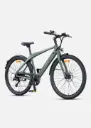
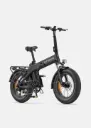
In Spain, where the urban fabric mixes cobblestone streets from historic centres with smooth asphalt cycle lanes and very limited bike parking areas, neither option is perfectly universal. The ENGWE N1 AIR represents the urban end well: 22 kg, lightweight aluminium frame and a geometry optimised for city traffic. At the other extreme, the ENGWE EP-2 3.0 Boost is a folding fat tire that combines the versatility of wide wheels with the practicality of folding, at €1,199. Both are valid — but for different user profiles, as you will see below.

Scenario 1: Tackling Cobblestones and Uneven Streets
The differences between fat bike and urban ebike become most evident at the first traffic light on a historic Spanish street. Cobblestones, lifted paving slabs, improvised speed bumps and gravel lanes are the reality of many urban centres in cities like Toledo, Seville, Salamanca or the Carmen district in Valencia. In this scenario, fat tires win clearly: their 4-inch or wider tyres act as natural shock absorbers, absorbing vibrations before they reach your wrists and back. The result is a significantly more comfortable ride on uneven surfaces without the need for a high-end front suspension.
Urban electric bikes, on the other hand, transmit more road irregularities, especially if they do not include front suspension. This does not mean they are unusable on cobblestones — many commuters ride them daily without issue — but the experience is less comfortable and you have to moderate your speed in those areas. If your usual route includes a significant stretch of historic centre or unpaved streets, the fat tire takes this scenario. Scenario 1 winner: Fat Tire.
Scenario 2: Rainy Weather and Slippery Surfaces
Spain is not just sunshine: the northern peninsula has rainfall comparable to central Europe, and even Mediterranean cities like Barcelona or Valencia experience heavy rain seasons in autumn and spring. In wet surface conditions, the tyre width of fat tires provides a larger contact area with the tarmac, which improves traction and reduces the risk of skidding during sharp manoeuvres. For the best ebike for commuting in Spain in wet climates, this factor is not minor: a sudden brake at 25 km/h on wet tarmac can be dangerous on any type of bike.
Urban electric bikes are not at an absolute disadvantage in the rain, as long as they carry tyres with a tread pattern suitable for wet conditions — something that premium ranges usually include. However, with standard smooth-profile tyres, wet traction is clearly inferior to that of a properly inflated fat tire. Another factor to consider: fat tires allow you to lower tyre pressure to further increase the contact area, a technique commonly used on difficult surfaces that narrow tyres cannot accommodate. Scenario 2 winner: Fat Tire.

Scenario 3: Parking and Security in the City
The advantages and disadvantages of wide wheels in the city are reversed when it comes to parking. In Spanish cities, bicycle parking is a real problem: the designated spots are usually narrow linear racks or rings on lamp posts, which require some skill to manoeuvre a bulky bike into. Fat tires, with their larger diameter and wider wheels, are harder to fit into standard racks and take up more lateral space, which can turn a five-minute parking stop into a small ordeal. Furthermore, their greater weight makes them more awkward to lift onto a kerb or carry into a premises.
Urban electric bikes stand out clearly here. They are narrower, lighter — the ENGWE N1 AIR weighs 22 kg, while an equivalent fat tire easily exceeds 30 kg — and are manoeuvred more easily in tight spaces. If you work in an office where you can bring your bike inside, or if parking at your destination is limited, the urban bike will give you far fewer headaches. Scenario 3 winner: Urban Electric Bike.
| Scenario | Fat Tire | Urban Bike | Winner |
|---|---|---|---|
| Cobblestones and uneven streets | Very comfortable — absorbs vibrations | Transmits more impacts without suspension | Fat Tire |
| Rain and wet surfaces | Greater traction due to contact area | Depends on tyre type | Fat Tire |
| City parking | Bulky and heavy — hard to manoeuvre | Light, narrow, easy to fit | Urban |
| Combined public transport | Heavy and not easily foldable (except folding models) | Lighter and easier to handle on platforms | Urban |
| Steep hills | More weight = higher battery consumption | Efficient motor assist on inclines with less weight | Urban |
| Mixed routes (tarmac + dirt) | Adapts without any changes | Limited on dirt or gravel sections | Fat Tire |
| Average speed on cycle lane | Higher rolling resistance | More efficient and faster on smooth tarmac | Urban |
Scenario 4: Public Transport and Portability
Modern commuting in Spain is rarely door-to-door by bike. Most work commutes involve combining the ebike with the metro, suburban rail or urban bus: you ride to the station, take the bike on transport, and ride from the stop to the office. In this multimodal model, the fat tire vs urban electric bike presents critical differences. The weight of a standard fat tire — which easily exceeds 30–33 kg — means that climbing stairs in the metro, manoeuvring on a crowded platform or fitting it into a bike compartment becomes a physical workout in itself.
Urban electric bikes offer a notable practical advantage here. An interesting option for this multimodal use is the ENGWE EP-2 3.0 Boost, a folding fat tire at €1,199 that attempts to partially resolve this dilemma: its wide wheels maintain the advantage on cobblestones, and the folding system makes it somewhat more manageable on public transport, although its weight remains higher than that of a classic urban bike. If combined transport is an important part of your commute, the urban bike remains the most comfortable option. Scenario 4 winner: Urban Electric Bike (with a caveat if you choose a folding fat tire).
Scenario 5: Climbing Hills and Performance on Slopes
Hills are one of the most commonly cited arguments in favour of ebikes in general, but between fat tire and urban bikes there are real differences in this scenario. The best ebike for commuting in Spain in cities with pronounced terrain — think Bilbao, Granada, the Gràcia neighbourhood in Barcelona or the Albaicín — is the one that combines a powerful motor with the lowest possible weight. Urban electric bikes win here: their lower total weight means the motor assists more efficiently, the battery lasts more kilometres per charge and the climbing experience is smoother. A 250W motor on a 22 kg bike performs noticeably better than the same motor on a 33 kg fat tire.
Fat tires are not defenceless on hills — many models incorporate powerful motors precisely to compensate for the weight — but battery consumption on inclines is considerably higher, which reduces real-world range on routes with significant elevation gain. If your commute regularly includes long climbs, the urban electric bike is the most efficient choice in terms of energy use and real-world range. Scenario 5 winner: Urban Electric Bike.
- Do you live in a flat city with well-paved cycle lanes? The urban bike is your most efficient option.
- Does your route mix historic cobblestone streets with mud? The fat tire will absorb those irregularities much better.
- Do you combine your ebike with the metro or suburban rail? Prioritise the reduced weight of an urban bike or a folding fat tire.
- Do you go on weekend rides along dirt trails as well as using the bike for work? The fat tire wins in overall versatility.
- Do you have parking issues or need to carry the bike up to a flat? The urban bike gives you far fewer logistical problems.
Scenario 6: Mixed Routes — When the Cycle Lane Ends on a Dirt Track
In many Spanish cities, cycle lanes end abruptly and the rider finds themselves facing a dirt path, a park trail or a gravel surface before reaching their destination. This mixed scenario — very common in industrial estates on the outskirts, riverside parks or peri-urban routes — is where the fat tire demonstrates its clearest differential value. The fat tire requires no adaptation: slow down slightly and continue without issue over dirt, gravel or wet grass, maintaining traction and stability without needing to dismount or change route.
An urban electric bike with a narrow tyre, on the other hand, can be difficult to control on loose gravel or wet dirt, and the risk of punctures increases considerably. If your route includes even 500 metres of unpaved track, the fat tire eliminates that concern entirely. Folding fat tires like the EP-2 3.0 Boost are especially interesting for this urban-adventurer user profile who wants the best of both worlds without giving up a degree of practicality. Scenario 6 winner: Fat Tire.
Scenario 7: Average Speed and Efficiency on Asphalt Cycle Lanes
If your commute is mainly along smooth cycle lanes or paved roads — the most common scenario in cities like Valencia, Madrid or Seville — the urban electric bike has a technical advantage that translates into greater real-world range per charge. The narrower tyres of urban bikes have lower rolling resistance on tarmac: they need less energy to travel at the same speed as a fat tire, meaning the battery lasts more kilometres and the pedal assist feels smoother and more natural. For the commuter doing 10–15 km daily each way along a cycle lane, this difference is felt in the everyday experience.
The ENGWE N1 AIR is an example of an urban bike designed for exactly this profile: a €1,449 model with EN 15194 certification and a 3-year warranty, built for the urban commuter who prioritises efficiency, comfort on tarmac and ease of daily use. Its trekking geometry allows a comfortable upright posture for commutes of 30–60 minutes, and its contained weight makes it manageable in moments when it needs to be lifted or manoeuvred in tight spaces. Scenario 7 winner: Urban Electric Bike.

Final Model Comparison: ENGWE Fat Tire vs Urban by Real Specifications
To make the decision completely concrete, here are the two reference models from the new ENGWE range that best represent each category within the €1,000–1,500 budget. The data is verified from the official catalogue, with EN 15194 certification and a 3-year warranty in both cases.


Conclusion: Which Is the Best Option for You?
The result of this 7-scenario comparison is clear: if you live in a Spanish city with well-paved cycle lanes, need to combine the ebike with public transport and parking is limited, the urban electric bike wins in 4 out of 7 scenarios. If your route includes uneven streets, mud, mixed trails or frequent rainy conditions — and the extra weight is not a logistical problem for you — the fat tire will give you more comfort and versatility. In Spain, the most common profile of the 30–50 year old urban commuter fits better with a classic urban bike for everyday use, reserving the fat tire for profiles with mixed routes or regularly uneven surfaces. Visit the ENGWE Spain store to explore both options with their full specifications and choose the one that truly fits your routine.