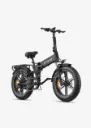
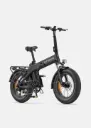
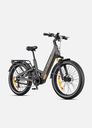
As of 26 August 2026, electric bike grants in Spain —including subsidies, incentives and tax deductions— form a territorial map rather than one open nationwide consumer scheme. Programmes are available in Madrid, Galicia, Gran Canaria and La Rioja; the Valencian Community applies a tax deduction; and Barcelona has announced up to €400 for urban or folding e-bikes and €800 for cargo bikes in 2027, although applications are not open. This guide compares the calls and reviews which ENGWE models offer the strongest technical and price fit without presenting them as pre-approved.
Short answer: which electric-bike grants and subsidies exist in Spain?
Spain's Transport Ministry closed a prior consultation on future national rules in March 2026; that process is not an application for funding. Today's options depend on where you live, when you buy, the type of bicycle and, in some schemes, the seller.
Barcelona is the newest announcement, but it is not open yet. Its rules are expected before the end of 2026 and applications in the first quarter of 2027. If support determines your purchase, check your territory's official procedure first.
Last editorial check: . Calls may close early when their budgets are exhausted.
Electric bike grants and subsidies in Spain: 2026 map
Spanish authorities use ayuda as a broad term, subvención for a direct public award, incentivo for a wider support programme and deducción or bonificación fiscal for tax relief. Searchers may also use “subsidio para bicicleta eléctrica”, although Spanish calls more often use ayuda, subvención or programa de incentivos. There is no single national subsidy available on the same terms nationwide. In March, the Ministry of Transport opened a prior public consultation for future national rules. It closed on 18 March and did not accept buyer applications. The Auto+ programme should not be confused with a grant for an ordinary pedal-assist bicycle either. For any specific call, the buyer must verify territory, purchase date, price ceiling, sales channel, equipment and exact-variant documents: sharing a commercial model name does not automatically make a bicycle eligible or guarantee public funding.
| Place and scheme | Status | Indicative amount | Date or deadline | Most important filter |
|---|---|---|---|---|
| Spain — future national rules | In preparation | To be defined | Prior consultation closed 18 Mar 2026; no purchase call | Do not confuse a rule-making consultation with an open grant |
| Barcelona city | Announced, not open | Up to €400 urban/folding; €800 cargo | Rules expected before end-2026; applications planned for Q1 2027 | Do not buy on the assumption of eligibility before the rules |
| Madrid Region — Plan Mueve | Open | 50% before tax, maximum €600 | Until 31 Dec 2026 or exhaustion; apply within 3 months of purchase | Residency, invoice below €3,000 including VAT, minimum battery and specified equipment |
| Madrid city — Cambia 360 | Open | 50% before tax and excluding accessories, maximum €400 | 15 Apr–15 Sep 2026 | Madrid registration, exact purchase window and two-year retention |
| Galicia — EBici | Open | 50%/€500 standard; 60%/€600 large family; 70%/€700 special large-family category | Until 13 Nov 2026 or exhaustion | Purchase through a participating retailer with a physical establishment in Galicia; the shop files the application |
| Gran Canaria | Open | 50% before tax, maximum €600 | 2026 call, until 31 Dec or exhaustion | Residency, new purchase from 1 Jan 2026 and a two-year retention obligation |
| La Rioja — cargo/passenger cycles | Open | 50% before tax, maximum €4,000 | Until 30 Sep 2026 | Only qualifying cargo/passenger cycles with authorised maximum mass above 150 kg; not a standard urban e-bike scheme |
| Valencian Community — income-tax deduction | Tax benefit | 10%; maximum base €1,540, maximum deduction €154 | Claimed in the tax return, subject to tax year and income limits | One vehicle per taxpayer per year; public grants reduce the base |
“Open” does not guarantee that money remains or that a specific bike will be accepted. Check the official procedure on both the purchase date and the application date.
What we know about the Barcelona e-bike subsidy
The measure is included in the city's 2026–2030 Bicycle Agenda and was reported on 21 August. The plan envisages a €1 million annual budget, more than 2,000 beneficiaries per year and an initial four-year run. The announced maximum amounts are:
- Up to €400 for urban or folding electric bikes.
- Up to €800 for electric cargo bikes.
The important phrase is “plans to launch”. There is no application page or final text that lets a retailer certify a particular model yet. The available details come from the announcement reported by La Vanguardia and a follow-up from Metrópoli Abierta. Until Barcelona publishes the rules, any list of “approved e-bikes” would be premature.
Should you buy now and apply later?
Not if you depend on the subsidy. The announcement identifies approval of the rules as the possible start date for eligible purchases. Buying earlier could leave your invoice outside the programme. A later purchase will still need to meet the final price, bike type, residency, payment and documentation conditions.
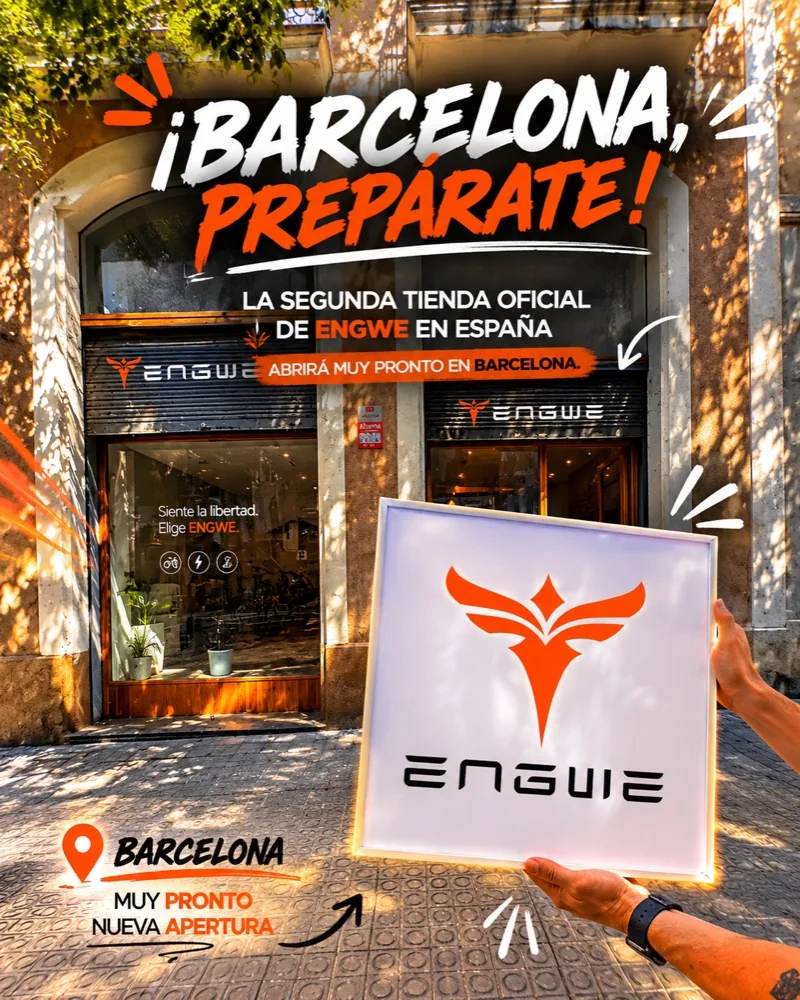
Barcelona · opening soon
Barcelona also has separate ENGWE news
The future city subsidy and the upcoming official ENGWE store in Barcelona are two separate developments. The store is not open yet, but you can follow its progress on our stores page. Once the grant rules appear, we will check the documents for each model before describing it as a candidate.
Which requirements recur across electric bike grants and subsidies?
Most personal e-bike schemes begin with the same baseline: a nominal motor rating no higher than 250 W, assistance that progressively reduces and cuts before or at 25 km/h, and no independent motor propulsion once the rider stops pedalling. A full invoice, bank payment evidence, serial number and declaration of conformity are also common. Our guide to electric-bike rules in Spain explains the distinction between an EPAC and a vehicle that may need a different approval route.
Local conditions come next. Madrid Region and Galicia impose equipment requirements and configuration limits that can exclude full-suspension bikes. Galicia also asks for a battery of at least 248 Wh, lights, mudguards, a kickstand and UNE-EN 15194 conformity. Plan Mueve Madrid adds its own battery, price and paperwork thresholds. La Rioja does not fund any ordinary e-bike: its line is designed for cargo or passenger cycles with authorised maximum mass above 150 kg.
Checklist before you pay
- Open the official call and confirm that it remains within deadline and budget.
- Check residency, age, income and maximum number of vehicles.
- Match the exact model and variant, not just the commercial family name.
- Obtain nominal power, assistance cut-off, battery data, CE/UNE-EN 15194 declaration and serial number.
- Look for required lights, mudguards, kickstand, suspension exclusions or minimum mass.
- Confirm who files: buyer, participating retailer or both.
- Use an accepted payment method and keep the invoice, proof of payment and technical file.
- Never stack two schemes unless both sets of rules expressly allow it.
Which ENGWE bikes start with an advantage when applying for a grant?
A grant is not awarded to a brand. It is awarded to a person, purchase and specific bike that meet the rules. Even so, several ENGWE bikes begin from a particularly favourable position: prices are accessible, they are sold as 250 W and 25 km/h EU EPACs, their batteries sit well above common minimums and, on the most suitable urban models, lights, mudguards and a kickstand already come fitted.
Price is the practical advantage. On 26 August 2026, ENGWE Spain's VAT-inclusive prices are €999 for the P275 SE, €1,199 for the O20 Boost, €1,299 for the EP-2 3.0 Boost, €1,399 for the ENGINE PRO 2.0 and €1,899 for the new E26 3.0 Pro. Every one sits comfortably below the Madrid Region Plan Mueve invoice ceiling of €3,000. These are promotional prices checked on that date and may change.
Which prices leave room below eligible-cost ceilings?
The Madrid Region technical annex requires an invoice below €3,000 including VAT for a bicycle. The five models above sit between €1,001 and €2,001 below that ceiling. A moderate price also makes a fixed or percentage-based grant a useful share of the purchase, although a published maximum is never the same as a guaranteed award.
This headroom does not predict Barcelona's rules. The city still needs to define any purchase-price ceiling and how its announced €400 will be calculated. Nor does it replace residence, invoice-date, participating-retailer or document requirements. The accurate conclusion is that ENGWE offers several affordable candidates to assess, not that every model is approved in advance.
What do the recommended ENGWE models provide, requirement by requirement?
| Common grant filter | What these ENGWE bikes provide | Practical reading |
|---|---|---|
| Nominal motor rating and assistance cut-off | O20 Boost, EP-2 3.0 Boost, ENGINE PRO 2.0 and E26 3.0 Pro list 250 W nominal ratings and assistance limited to 25 km/h. | They match the EPAC baseline used in Madrid, Galicia and other schemes. Keep the bike in its legal factory configuration. |
| Minimum battery capacity | O20: 720 Wh; EP-2 3.0: 648 Wh; ENGINE PRO 2.0: 768 Wh; E26 3.0 Pro: 720 Wh. | All four comfortably exceed the 248 Wh minimum applied in Madrid and Galicia. |
| Front and rear lights | O20 and EP-2 3.0 specify front and rear lighting; ENGINE PRO 2.0 and E26 3.0 Pro also include both light positions. | This is a good base for calls requiring a complete lighting system. The product sheet and invoice should reflect the delivered variant. |
| Mudguards and kickstand | O20, EP-2 3.0 and E26 3.0 Pro include front and rear mudguards plus a stand. ENGINE PRO 2.0 includes mudguards; confirm the rest of the equipment for the production batch. | Galicia requires all three items. Do not assume that adding a component after applying will cure an initial omission. |
| No full suspension | O20 Boost and EP-2 3.0 Boost have front suspension, not full suspension. ENGINE PRO 2.0 and E26 3.0 Pro are full-suspension bikes. | O20 and EP-2 3.0 start better for Madrid and Galicia. ENGINE PRO 2.0 and E26 3.0 Pro may fit other grants but are excluded where full suspension is prohibited. |
| Conformity and documents | O20 and EP-2 3.0 publish CE EN 15194 certification; the E26 3.0 Pro page states TÜV certification according to the manufacturer. | Always request the declaration of conformity, exact-model technical sheet, serial number and complete invoice before applying. |
This comparison uses current ENGWE specifications and the official rules for Galicia's EBici scheme and Madrid Region's Plan Mueve. It shows a sound technical starting point; the authority will still validate the variant, retailer, date and documents.
Four popular and new models to assess first
O20 Boost: the most complete urban candidate
At €1,199, it is foldable, uses a 250 W motor, cuts assistance at 25 km/h and carries a 720 Wh battery. Its lights, mudguards, stand and documented CE EN 15194 certification make it one of ENGWE's strongest candidates on paper for strict urban schemes and Barcelona's future urban or folding category.
EP-2 3.0 Boost: balanced equipment and price
For €1,299, it combines 250 W, 25 km/h, a 648 Wh battery, lights, mudguards, a kickstand and an available CE certificate. It has front suspension only. This makes it a very competitive folding option when the scheme accepts its format and the retailer or sales channel meets the procedure.
ENGINE PRO 2.0: a bestseller with one caveat
Its €1,399 price, 250 W motor, 25 km/h limit, 768 Wh battery, lights and mudguards fit many financial and electrical filters well. The caveat is decisive: it has full suspension, so it is not a candidate for the current Madrid and Galicia schemes that expressly exclude that configuration.
E26 3.0 Pro: new, fully equipped and still below €2,000
The new E26 3.0 Pro costs €1,899 and combines a 250 W mid-drive motor, assistance at 25 km/h, a 720 Wh battery, lights, mudguards, a stand and stated EN 15194 certification. It is an interesting candidate where full suspension is allowed; it should not be presented in Madrid or Galicia while the current exclusion remains.
If the goal is to maximise technical alignment with a strict urban scheme, the P275 SE also deserves attention: it costs €999 and has a 250 W motor, 25 km/h limit, 468 Wh battery, lights, mudguards and a stand. A cargo bike such as the LE20, by contrast, must be compared with a dedicated category and its weight and transport requirements; a low price alone is not enough.
Which ENGWE models should you assess for each use?
Confirmed ENGWE Spain store sales in 2026 place the ENGWE O20 Boost among the most popular current choices, alongside bikes such as the ENGINE PRO 2.0 as well as the EP-2 3.0 Boost. The new E26 3.0 Pro is also gaining traction. Popularity helps frame use cases; it is not an eligibility certificate.
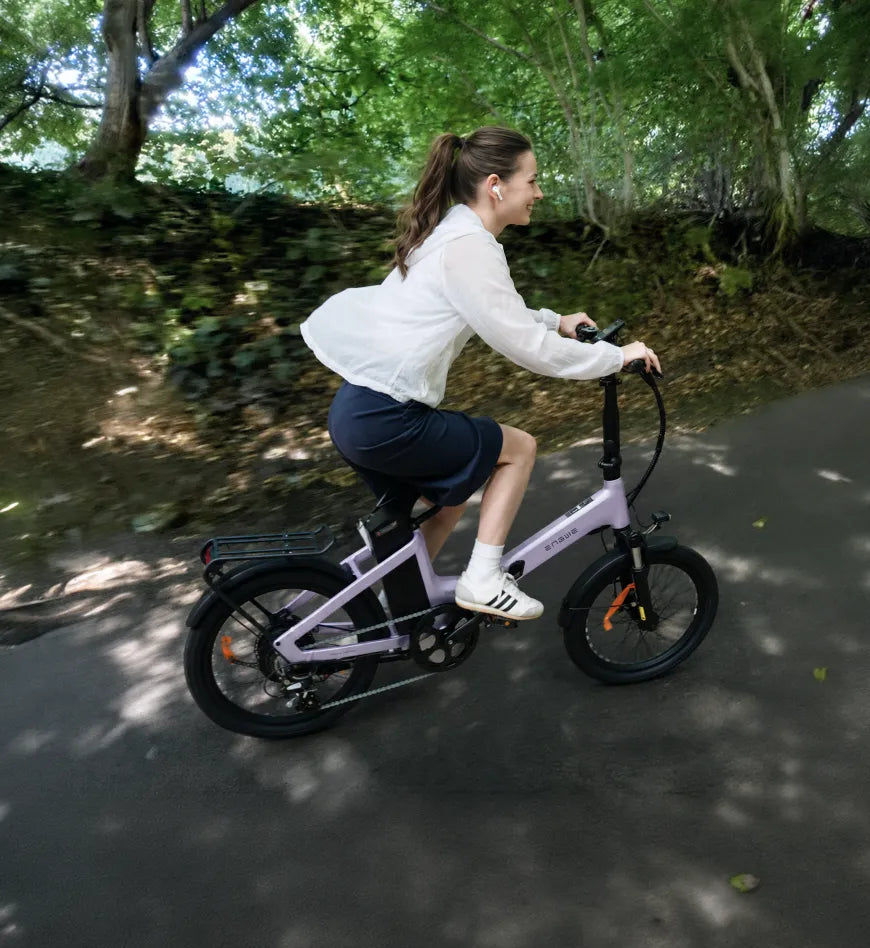
Urban and folding: O20 Boost
The O20 Boost has a 250 W nominal motor, assistance limited to 25 km/h and CE EN 15194 certification listed on its product page. Its format makes it a logical bike to assess once Barcelona publishes the “urban or folding” category. We are not labelling it approved: the price ceiling, document list and any equipment restrictions remain unknown.
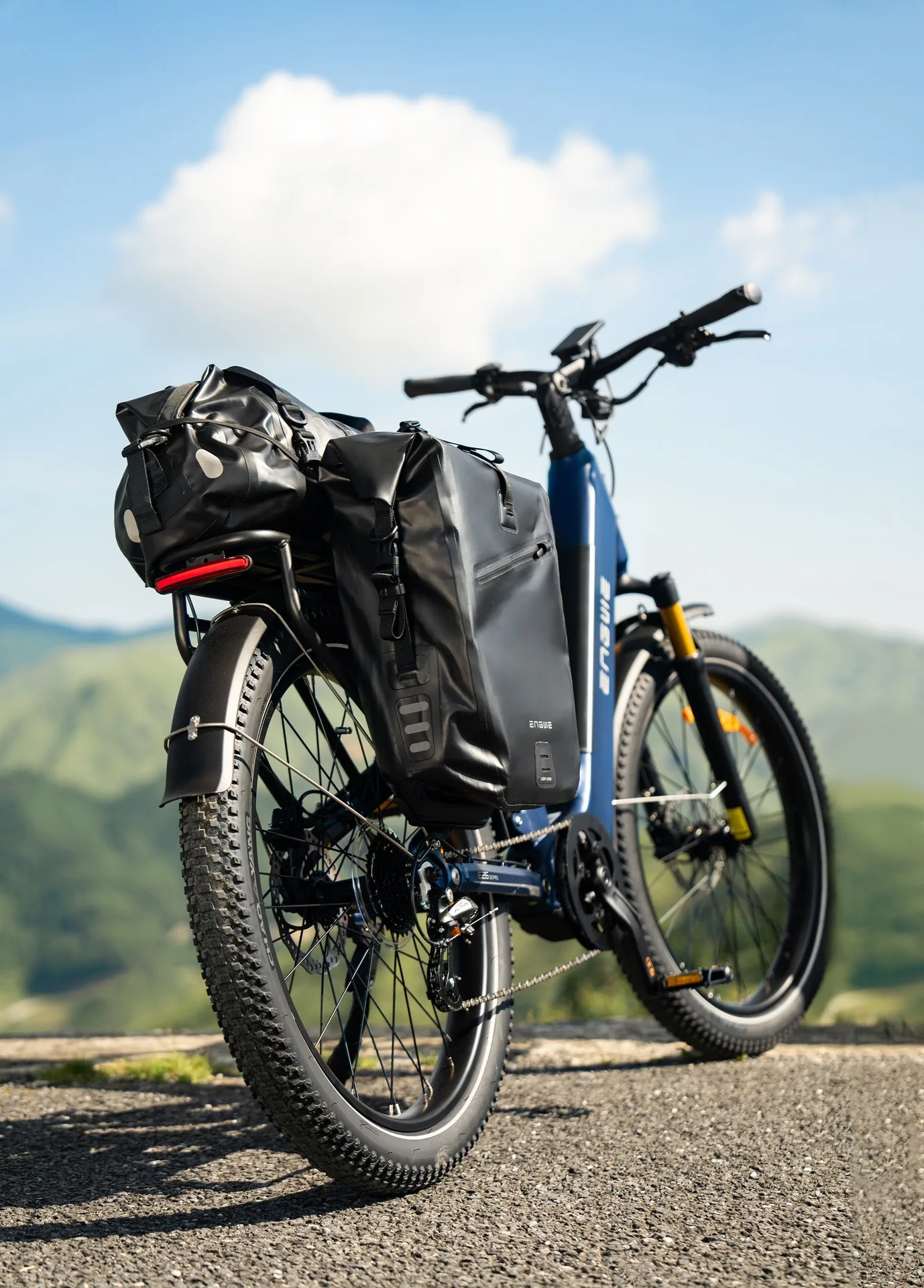
Comfort and touring: E26 3.0 Pro
The E26 3.0 Pro combines a 250 W nominal mid-drive motor, assistance limited to 25 km/h and full suspension. It is designed for comfort and varied rides, but full suspension can exclude it from schemes that prohibit that configuration, including the current Madrid Region and Galicia rules. Barcelona and Gran Canaria use different frameworks; check the relevant call.
For urban schemes with strict equipment rules, the P275 SE and N1 Air are sensible models for a document-level check. For cargo use, the LE20 deserves a specific comparison with Barcelona's future rules or La Rioja's cargo-cycle line. Eligibility always belongs to the exact variant and its documents, not to a brand as a whole.
How do Madrid, Galicia and online purchases affect eligibility?
How you buy can matter as much as what you buy. Galicia routes EBici through participating retailers with a physical presence in the region; an online purchase outside that network does not follow the prescribed process. Madrid lets the applicant submit the claim but has strict purchase and filing windows. Gran Canaria and La Rioja have their own proof and retention requirements.
Before adding an e-bike to your basket, send us the official call. We can provide the available product sheet and commercial documentation, but the granting authority makes the final decision. No retailer can replace that decision.
Looking for an electric bike grant or subsidy?
Bookmark this guide and check its update date before paying. We will keep following calls across Spain and, when Barcelona publishes its rules, review the amount, eligible purchase date, price limits, documents and candidate models.
Frequently asked questions
Sources and editorial standard
We prioritised electronic offices, regional authorities and consolidated legislation. Barcelona is the main exception: the plan is known through local reporting because the city has not yet published the grant rules. We therefore describe it as an announcement, not an open call. Follow the official sources linked in the table and, for Valencia, the Spanish Tax Agency explanation.
This article is general information, not legal or tax advice and not a promise of an award. The official rules, call and granting authority's decision always prevail.